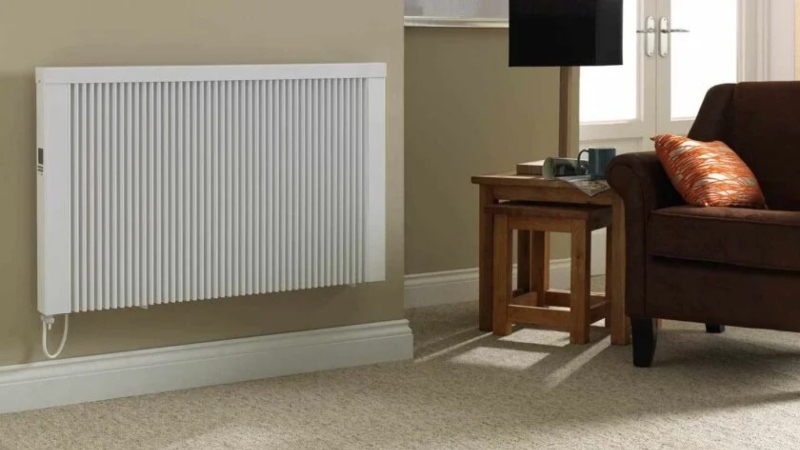
Electric radiators have moved from being a last resort for flats without gas to a mainstream heating choice. Part of that is regulatory — England’s Future Homes Standard, published in March 2026, comes into force on 24 March 2027 and sets carbon targets that a gas boiler simply cannot meet, so new homes will be built around electricity from the outset. Part of it is practical: electric radiators need no flue, no pipework and no annual gas safety check, which makes them a straightforward answer for extensions, loft conversions, garden rooms and homes off the gas grid.
The catch is running cost. Under the price cap covering 1 July to 30 September 2026, the average unit price of electricity sits at around 24.7p per kWh against roughly 5.7p for gas. That gap makes the right electric radiator — properly sized, properly controlled — far more important than it would be on a wet system. Below are the types worth shortlisting, and what each one is genuinely best at.
Aluminium dry thermal radiators — best for responsive, on-demand heat
These use an element bonded to aluminium fins or blocks. Aluminium conducts heat extremely well, so the radiator becomes noticeably warm within a minute or two and cools just as fast. That responsiveness makes them ideal for rooms used in short bursts — home offices, spare bedrooms, hallways — where you want heat now and don’t want to keep paying for it once you’ve left. The trade-off is minimal heat retention, so they cycle on and off more frequently than heavier alternatives.
Ceramic core radiators — best for steady warmth in main living spaces
Sometimes called dry stone or dry inertia models, these heat a dense ceramic block that stores warmth and releases it gradually. Expect around ten minutes to reach full temperature, but useful residual heat once the element has switched off. For a living room or main bedroom occupied for several hours at a stretch, that thermal mass means fewer cycles and a more even, comfortable heat. Denser core materials such as soapstone retain more still, though they cost more and take longer to warm up.
Oil-filled (thermal fluid) radiators — best for even heat and a familiar look
An element sits inside a sealed reservoir of thermal fluid — typically a glycol-based mixture rather than literal oil — which spreads warmth across the whole radiator body. The fluid is sealed for life and never needs topping up. The benefit is a genuinely uniform surface temperature with no cold spots, plus a column or panel appearance close to a conventional central heating radiator, which matters in period properties. They are slower to reach temperature and slower to cool.
Slimline panel convectors — best on a tight budget
Panel heaters warm air directly as it passes across the element, with little or no thermal storage. They are the cheapest and slimmest option, and perfectly reasonable for a utility room, garage conversion or holiday let used occasionally. Because they rely almost entirely on convection, heat can feel less even and disappears the moment they switch off — so they suit low-occupancy rooms rather than daily living space.
Infrared panels — best for draughty or high-ceilinged rooms
Rather than warming the air, infrared warms surfaces and people directly. That makes it unusually effective in spaces where convected heat is quickly lost: conservatories, barn conversions, churches, rooms with tall ceilings or persistent draughts. Panels can be wall or ceiling mounted and are available as mirrors or printed picture panels where wall space is at a premium. They work best with clear line of sight, so heavily furnished rooms are less suitable.
Electric towel rails — best for bathrooms and en suites
An electric towel rail dries towels in summer without firing up the whole heating system. Look for an appropriate IP rating for the bathroom zone it will occupy, and remember that in England and Wales electrical work in a bathroom is notifiable under Part P of the Building Regulations — this is a job for a qualified electrician, not a weekend project. Thermostatic elements with a boost function are the sensible specification.
Dual fuel radiators — best for year-round flexibility on a wet system
A dual fuel setup connects a radiator to the existing central heating circuit while also fitting an electric element, allowing it to run either way. In practice that means the towel rail or bathroom radiator works off the boiler in winter and off electricity alone in summer, when the heating is off. It is the most useful option for anyone who has a wet system and simply wants shoulder-season and summer coverage.
Smart and Wi-Fi controlled radiators — best for cutting running costs
This is a control layer rather than a separate technology, and at current electricity prices it is where the savings actually live. Since 1 January 2018, Lot 20 of the Ecodesign regulations has required fixed electric space heaters above 250W to hit a minimum seasonal efficiency figure — widely cited as 38% — which in practice means an electronic thermostat, a 24/7 or weekly programmer, and features such as adaptive start or open-window detection. App control, room-by-room scheduling and energy monitoring go further, letting you heat only the rooms you’re in, only when you’re in them.
High heat retention storage heaters — best for off-peak tariffs
If you’re on Economy 7, Economy 10 or a time-of-use tariff, modern high heat retention storage heaters charge overnight at the cheap rate and release heat under thermostatic and fan control during the day. Unlike the crude storage heaters of the 1980s, current models insulate far better and give you meaningful control over when the heat arrives. They only make financial sense alongside the right tariff, so check your unit rates first.
The efficiency myth worth knowing
Marketing copy often claims one electric radiator type is more efficient than another. Treat that carefully. Every electric resistance heater converts essentially all the electricity it draws into heat inside your room — the element itself is not where the differences lie. What actually changes your bill is accurate sizing, thermostat precision, how the radiator cycles, and whether it’s heating an occupied room or an empty one. Visit Relationship Guide FPMomHacks for further details.