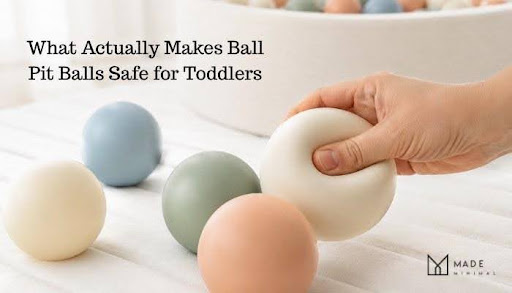
When it comes to safe play products for toddlers, you need to consider plastic type, ball size, and label claims. If you’ve skipped these checks as an Australian parent, the wrong plastic or undersized ball can slip through unnoticed and end up in your child’s hands.
We get it. You’re trying to set up a fun, safe play space for your little one, and the last thing you want is to second-guess every purchase. At Made Minimal, we believe a little awareness before you buy goes a long way for your child’s safety.
That’s why this article covers what makes a toddler play ball genuinely safe, including plastic types, label literacy, and ongoing care. Your kid’s about to spend hours in there, so it’s worth getting right before they dive in.
Not All Plastic Is the Same
The plastic balls sitting in your child’s play pit aren’t all created equal. The two most common types are Low-Density Polyethylene (LDPE) and Polyvinyl Chloride (PVC). They look similar on the outside, but their chemical makeup and safety profiles are very different.
Both plastic types show up in ball pit sets sold across Australia, but they aren’t equal:
PVC Comes With Real Risks
PVC is the cheaper option, so budget-focused manufacturers lean on it heavily. What they don’t advertise is that PVC can release harmful chemicals. For infants who mouth everything during sensory play, that’s a risk worth taking seriously (and yes, kids will mouth everything, every single time).
LDPE Is What You Should Look For
So what should you be reaching for? LDPE. It’s flexible, durable, and the same material used in squeeze bottles and food-safe containers your family uses every day. This makes it suitable for children’s play equipment. That familiarity is reassuring for good reason.
We’ve reviewed enough children’s toy safety data to say confidently that LDPE is the safer choice. Unlike PVC, it doesn’t release harmful chemicals, even when kids chew on it repeatedly.
If the packaging doesn’t specify LDPE, that’s your cue to keep looking. Once the plastic type checks out, size is the next thing on the list.
The Size Question Parents Get Wrong
Did you know that for children under three, any toy smaller than a 20-cent piece poses a choking risk? Yes, and parents overlook this risk. Anything smaller than that goes straight on the avoid list, regardless of the developmental stage your child is at.
Most parents choose smaller balls because they fit more into the pit (guilty of this one ourselves). But more isn’t always better when babies are on the line.
At purchase, these two points are worth keeping in mind:
- The Choking Risk Parents Miss: A useful rule of thumb is that the smaller the child, the bigger the toy should be. For a child who can’t yet recognise or react to a choking situation, the margin for error is razor thin.
- The Safe Size Standard: According to the ACCC’s mandatory standard for infants under 36 months, any toy part that fits inside a small cylinder is classified as a choking hazard. For toddler play balls, that means size is a regulated safety requirement.
A quick size check removes one of the most preventable risks in infant play. Just like you’d check puzzle pieces or small game components before handing them to a kid, ball size deserves the same quick assessment.
BPA-Free Doesn’t Mean Completely Safe
BPA-free tells you the ball doesn’t contain Bisphenol A, but phthalates and PVC can still be present, and both carry risks for young children.
Diethylhexyl phthalate (DEHP) is permanently banned in Australia for children’s plastic items under 36 months. It’s a phthalate plasticiser commonly found in PVC products. The ban exists because regular exposure to DEHP has been linked to reproductive toxicity and hormonal disruption in children, especially those who mouth their toys.
So when you’re at the shelf, the label is where you’ll find what you need. You’re looking for three things listed clearly: BPA-free, phthalate-free, and PVC-free. If even one is missing, put it back and keep looking. It sounds strict, but your toddler’s going to be mouthing those balls for hours.
What to Check Before Your Child Gets In
Before your child’s first play session, focus on two things: rough seams and residual chemical smell. Both are simple to assess at home, yet a lot of parents skip them entirely.
Go through these two things first:
Seams and Surface Quality
Run a finger along each ball prior to handing them over, because rough seams on poorly made balls can scratch toddlers’ skin and mouths during play. We suggest you make it a practice before every first use.
In fact, CHOICE lists surface and edge inspection among its ten key safety checks for children’s toys (this way toddlers can get straight to the fun).
Chemical Smell and Off-Gassing
Ever opened a pack of new balls and been hit by a strong plastic smell? That’s off-gassing, where residual manufacturing chemicals haven’t fully settled yet. Lower-quality balls are more prone to it than soft toys or other children’s play products.
To be safe, give them at least 24 hours in a well-ventilated space before your child uses them.
Both the seam check and the smell test take under two minutes, and they cover the safety gaps that no label will flag for you. From here, the focus shifts to keeping those balls safe over time.
Cracks, Smells, and Grime: How The Infant Play Balls Degrade
Even good-quality play balls degrade over time. The ACCC advises parents to always check children’s toys for signs of breaking, brittleness, or tearing, since deteriorated toys can become a choking risk.
Two things tend to go wrong first:
- Cracks and Sharp Edges: LDPE balls develop cracks over time as the plastic weakens under repeated impact and pressure. Once that happens, the edges those cracks create are sharp enough to cut small hands and mouths during play.
- Grime and Odour Buildup: Children’s play balls absorb moisture and bacteria through the tiny surface imperfections that develop with regular use. It’s what produces the sour smell parents start noticing after a few months of regular play sessions.
Both issues are gradual, which is why they’re easy to miss. We’d suggest making it a habit to do a quick visual check and smell test once a month (it takes two minutes and saves a lot of regret).
Give Your Little One a Play Space Worth Trusting
Ball pit safety isn’t complicated once you know what to look for, and the world of children’s play products becomes a lot less overwhelming. The risks are real, but they’re avoidable.
We’ve covered plastic types, choking size standards, label literacy, pre-use checks, and how to keep balls safe over time. Put them together, and you’ve got a space where curious toddlers are encouraged to explore, develop fine motor skills, and build social skills through role play.
If ball pit safety feels overwhelming, Made Minimal can help you shop right. Our team is here to guide you through sensory toys, educational toys, and ball pit sets that support your child’s development through play.