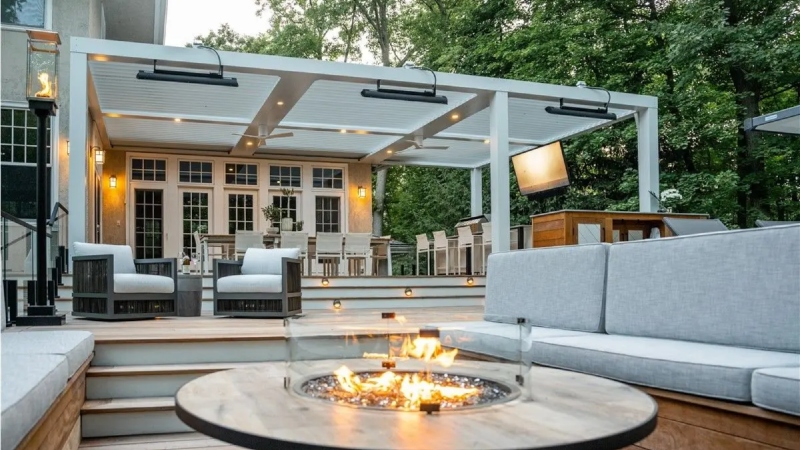
A successful backyard renovation involves more than choosing attractive pavers, plants, and outdoor furniture. The space must also remain dry after heavy rain, comfortable during hot afternoons, and private enough for homeowners to relax.
Experienced backyard remodeling contractors consider all three of these requirements during the early design stage. Instead of treating drainage, shade, and privacy as separate improvements, they create one coordinated plan in which every feature serves a practical and visual purpose.
This integrated approach can prevent expensive corrections while creating a backyard that looks polished and functions properly throughout the year.
Why Backyard Design Problems Should Be Solved Together
Drainage, shade, and privacy often affect the same parts of a backyard. For example, planting a row of trees may provide privacy and afternoon shade, but the location of those trees could interfere with underground drainage lines. A pergola may make a patio more comfortable, but its posts must be placed where they will not block the natural movement of water.
Professional backyard remodeling contractors study these connections before construction begins. They evaluate the size of the property, existing elevation, sunlight direction, nearby homes, soil conditions, and intended use of the space.
Planning everything together helps contractors avoid common problems such as:
- Water collecting beneath a pergola
- Privacy screens blocking necessary airflow
- Patio surfaces directing runoff toward the house
- Large trees damaging drains or hardscaping
- Shade structures making small yards feel enclosed
The objective is to create a balanced layout where practical features appear to be natural parts of the overall design.
How Backyard Remodeling Contractors Manage Drainage
Drainage is one of the first issues contractors examine because water problems can damage patios, landscaping, outdoor kitchens, and home foundations.
Evaluating the Existing Yard
Before recommending materials or structures, contractors identify low areas where water collects. They also look at roof downspouts, neighboring properties, existing slopes, soil composition, and the direction water travels during storms.
Even a visually flat yard can have elevation differences that influence runoff. Contractors may use grading equipment or digital measurements to understand how water moves across the property.
Creating the Correct Surface Slope
Patios and walkways are designed with a slight slope so water moves away from the house. The slope is usually subtle enough that homeowners do not notice it while walking or placing furniture.
In a hypothetical 20-by-30-foot patio, small elevation adjustments can guide rainfall toward landscaping, a drain, or another approved discharge area. This helps prevent standing water and slippery surfaces.
Adding Drainage Features
Depending on the property, backyard remodeling contractors may recommend channel drains, catch basins, French drains, permeable pavers, dry creek beds, or strategically placed planting areas.
These features do not need to look industrial. A dry creek bed, for example, can move water while serving as a decorative landscape feature. Permeable materials can also allow water to enter the soil instead of running across the patio.
Designing Shade Without Making the Yard Feel Dark
After drainage is addressed, contractors plan shade based on how the homeowner will use the backyard.
Morning sun may be welcome near a breakfast area, while strong afternoon sunlight can make an outdoor kitchen or seating space uncomfortable. Contractors track the sun’s direction and identify where shade will provide the greatest benefit.
Permanent Shade Structures
Pergolas, covered patios, pavilions, and roof extensions provide dependable shade. These structures are commonly installed over dining areas, outdoor kitchens, and conversation spaces.
Backyard remodeling contractors coordinate the size and placement of these structures with the home’s architecture. They also consider drainage around posts, roof runoff, lighting, fans, and electrical connections.
A structure that is too large can overwhelm a compact yard. One that is too small may fail to provide meaningful protection during the hottest part of the day.
Flexible and Natural Shade
Retractable awnings, shade sails, umbrellas, and outdoor curtains provide adjustable coverage. Homeowners can open or close these features depending on the weather.
Trees and tall plants offer a softer alternative. However, contractors consider mature plant size, root growth, maintenance, and leaf debris before placing vegetation near pools, patios, or drainage systems.
Creating Privacy Without Building a Visual Wall
Privacy is especially important in neighborhoods where homes are close together. The goal is to reduce direct views without making the backyard feel boxed in.
Backyard remodeling contractors frequently use layered privacy solutions instead of relying on one tall barrier.
A layered design might include a decorative fence at the property line, medium-height shrubs in front of it, and a pergola with curtains near the main seating area. Each feature blocks a different sightline while adding texture and depth.
Privacy Screens and Fencing
Wood slats, aluminum panels, masonry walls, lattice screens, and decorative fencing can provide immediate privacy. Contractors often repeat materials or colors from the home so the screen looks intentional.
Screens can also hide pool equipment, trash bins, air-conditioning units, or storage areas.
Strategic Landscaping
Evergreen shrubs, ornamental grasses, palms, and small trees can create natural screening. Instead of planting one continuous row, contractors may stagger plants to produce a more relaxed appearance.
The correct plants depend on available space, sunlight, maintenance expectations, and local growing conditions. Mature size is particularly important because overcrowded landscaping can eventually block walkways or interfere with nearby structures.
Combining All Three Features in One Backyard Plan
The strongest designs allow drainage, shade, and privacy features to support one another.
For example, a raised planting bed can help redirect water while holding tall shrubs that screen a neighboring window. A pergola can shade an outdoor dining area while supporting curtains or climbing plants for additional privacy. Permeable pavers can improve drainage beneath a shaded seating space.
Imagine a rectangular backyard with a patio near the home, a pool in the center, and neighboring properties on both sides. A contractor might slope the patio toward a concealed channel drain, install a pergola on the western side for afternoon shade, and add layered planting beds along the boundaries for privacy.
The result is not three separate solutions. It is one organized outdoor environment.
Questions to Ask Before Hiring a Contractor
Homeowners should ask how the contractor evaluates grading, manages stormwater, determines shade placement, and addresses views from surrounding properties.
It is also helpful to request a complete site plan before construction begins. The plan should show hardscaping, drainage systems, structures, landscaping, utilities, and property boundaries.
Reliable backyard remodeling contractors should be able to explain why each feature is placed in a particular location and how it supports the rest of the design.
Build a Backyard That Works as Well as It Looks
An attractive backyard can quickly become frustrating if water collects near the house, seating areas receive constant direct sunlight, or neighbors have an unobstructed view of the space.
Professional backyard remodeling contractors prevent these problems by approaching the yard as one connected system. Through careful grading, strategically positioned shade, and layered privacy features, they create outdoor living spaces that are comfortable, functional, and visually cohesive.
When drainage, shade, and privacy are planned from the beginning, the finished backyard is easier to maintain and more enjoyable for everyday living, family gatherings, and outdoor entertaining. Visit: Relationship Guide FPMomHacks