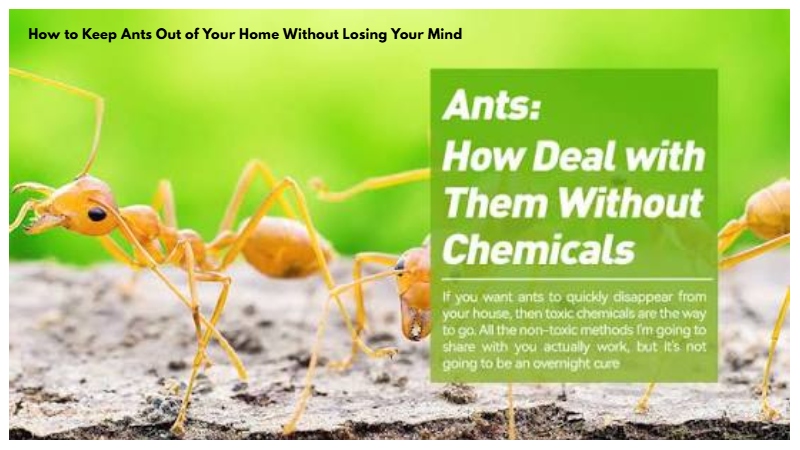
Few household pests are as small—and as irritating—as ants. You spot one near the kitchen sink, wipe it away, and assume the problem is over. Then another appears. And another. Before long, there’s a tiny parade making its way across the counter.
The good news is that you don’t have to spend your entire day chasing ants around the house. Keeping ants out of your home is usually less about killing every ant you see and more about removing the conditions that attract them in the first place.
A combination of good housekeeping, moisture control, sealing entry points, and the right pest-control strategy can make your home considerably less appealing to ants.
Why Do Ants Keep Getting Into the House?
Ants generally enter homes because they find something useful inside.
Food is an obvious attraction, especially sugary foods, crumbs, grease, and anything left uncovered. But food isn’t the only reason. Water and shelter can also draw ants indoors.
Small leaks beneath sinks, damp areas around pipes, condensation, pet-water bowls, and other moisture sources may provide ants with what they need to survive.
Once a worker ant discovers a reliable food or water source, it can leave a chemical trail that helps other ants find the same location. That’s why wiping away individual ants often doesn’t solve the underlying problem.
The goal is to eliminate the attraction and interrupt access to the home.
Start by Removing Their Food Sources
The kitchen is often the first place to investigate.
Even tiny amounts of food can be attractive to ants. A little spilled juice, crumbs beneath an appliance, or residue around a trash can may be enough to keep them interested.
Make these habits part of your normal routine:
- Wipe kitchen counters after preparing food.
- Clean crumbs from floors and dining areas.
- Store sweets and other attractive foods in sealed containers.
- Keep garbage containers closed and clean.
- Rinse recyclable food containers before storing them.
- Clean spills as soon as possible.
- Avoid leaving dirty dishes sitting for long periods.
You don’t need to turn your home into a laboratory. Consistent basic cleaning can simply remove many of the things ants are looking for.
Don’t Forget Pet Food
Pet food can be an overlooked source of attraction.
If your dog or cat has access to food throughout the day, ants may eventually discover it. Keep dry food in a sealed container and clean up spilled food around feeding areas.
If practical, avoid leaving uneaten food out for extended periods.
Water bowls can also contribute to moisture availability, so check the surrounding area regularly for spills or persistent dampness.
Fix Leaks and Control Moisture
Food gets most of the attention, but ants also need water.
Check beneath sinks, around toilets, near refrigerators, around washing machines, and anywhere plumbing enters walls or cabinets.
A slow leak may not seem significant to you, but a consistently damp area can create attractive conditions for pests.
Fix plumbing problems promptly and improve ventilation in areas that stay damp.
If moisture keeps returning despite your efforts, investigate the underlying cause rather than repeatedly treating the surface.
Seal the Ways Ants Get Inside
Ants are remarkably good at finding small openings.
Look around windows, doors, utility penetrations, plumbing openings, foundation cracks, and other gaps where the exterior connects with the interior.
Caulk can be useful for sealing many small cracks and gaps. Weatherstripping around doors and windows can also reduce potential entry points.
Pay particular attention to areas where you have repeatedly seen ants.
If ants consistently appear along one section of a wall or near a particular window, there may be an entry point nearby.
Keep Vegetation Away From the House
Plants can sometimes provide ants with a convenient route toward your home.
Branches touching the roof or exterior walls can create bridges that make it easier for insects to move between landscaping and the structure.
Trim vegetation where appropriate and avoid allowing dense plant growth to remain directly against exterior walls.
Also inspect areas around outdoor faucets, irrigation systems, and garden beds for excessive moisture.
A healthy landscape doesn’t need to be eliminated. The objective is simply to maintain a reasonable separation between vegetation, moisture, and the structure.
What Should You Do When You See an Ant Trail?
Don’t panic—and don’t immediately start spraying everything.
First, watch the trail for a moment.
Where are the ants coming from? Where are they going? Are they entering through a crack, around a window, beneath a door, or through another opening?
Finding the route can tell you much more than killing the visible ants.
Once you’ve identified the likely entry point, clean the area and address the underlying source. Sealing the opening after determining that it is an appropriate entry point can help prevent the problem from returning.
Should You Kill the Ants You See?
It depends on the situation.
Wiping up visible ants removes the immediate nuisance, but it may not eliminate the colony. In some circumstances, simply killing worker ants can leave the underlying source untouched.
Ant baits can be useful because worker ants may carry the bait back to the colony. However, products must be used according to their labels, and they should be kept away from children and pets as directed.
Avoid randomly combining different pesticides or using larger quantities than the label specifies. More pesticide does not automatically mean better pest control.
Be Careful With DIY Ant Remedies
The internet is full of homemade ant-control suggestions, from household powders to essential oils and other substances.
Some may discourage ants temporarily, but that does not necessarily mean they will eliminate an established colony.
It’s also important to distinguish between something that smells unpleasant to an ant and something that actually solves a pest infestation.
If you choose a DIY method, understand what it is realistically capable of doing. Prevention and sanitation are often more dependable long-term strategies than repeatedly applying household substances.
Identify the Ant Before Choosing Treatment
Not every ant problem is the same.
Different ant species have different nesting habits, food preferences, and behaviors. Some nest outdoors and simply forage inside, while others can establish nests in or around structures.
That distinction matters because the best control strategy depends partly on where the colony is located.
If you’re dealing with persistent ants and can’t determine the source, consider having the pest properly identified rather than repeatedly treating random areas.
When Ant Problems Keep Coming Back
If you’ve cleaned, sealed obvious gaps, corrected moisture problems, and the ants continue returning, it’s time to look beyond the visible trail.
A recurring infestation may indicate:
- An outdoor nest close to the house
- Moisture inside or around the structure
- Hidden food sources
- Entry points that haven’t been identified
- A species that requires a particular control strategy
- A larger pest-management issue
At that point, professional pest control may be the most efficient option.
A qualified pest professional can inspect the property, identify the ant species when possible, locate likely nesting or entry areas, and recommend an appropriate treatment plan.
How to Prevent Ants From Coming Back
Once you’ve dealt with an infestation, prevention is much easier than starting over.
Keep food stored properly, clean spills promptly, address plumbing leaks, maintain weather seals, and periodically inspect the exterior of the home.
It also helps to pay attention to seasonal patterns. If ants tend to appear during particular weather conditions, take preventive steps before the problem reaches its peak.
Regular inspection doesn’t need to become another household chore. A quick look around the kitchen, bathrooms, windows, doors, and exterior foundation from time to time can catch potential problems early.
A Simple Ant-Prevention Routine
If you want to keep things manageable, focus on a few basic habits.
Every day: Clean food spills and crumbs, keep food covered, and avoid leaving pet food sitting out unnecessarily.
Every week: Check common moisture areas, clean around appliances, and inspect places where you’ve previously noticed ant activity.
Every few months: Look for cracks, damaged seals, vegetation touching the home, and other potential entry points.
When ants appear: Follow the trail, identify the likely source, clean the area, and address the reason they’re entering rather than simply killing the ants you can see.
This approach is much less stressful than constantly reacting to individual ants.
Final Thoughts
Keeping ants out of your home doesn’t require obsessive cleaning or a cabinet full of pesticides.
The most effective approach is usually straightforward: remove food and water sources, seal entry points, maintain the exterior, and respond to recurring infestations strategically.
Seeing a few ants doesn’t necessarily mean your home is overrun. Start by figuring out what attracted them and how they’re getting inside.
And if the problem refuses to go away, don’t spend weeks fighting an invisible colony. A professional inspection can identify what’s happening and help you choose a solution that makes sense for your home.
The goal isn’t to wage war on every ant you see. It’s to make your home a place they have no good reason to visit.