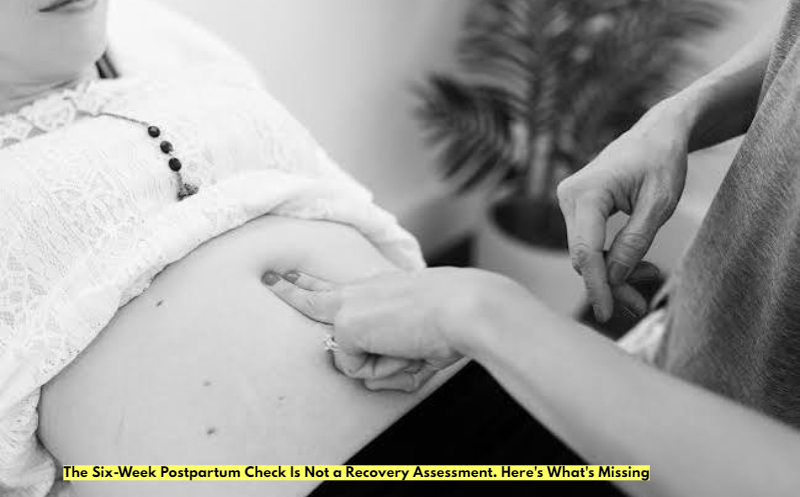
At around six weeks after giving birth, most women have a single appointment, are told they are cleared, and are sent back into their lives. Medically cleared to exercise. Approved for intimacy. Considered, in the language many hear, to be normal again. It is one of the most quietly misleading moments in postpartum care, because that appointment was never designed to assess recovery. It was designed to confirm you are not in danger.
Understanding the difference changes what women expect of their own bodies, and how long they are willing to wait before asking for help.
What the six-week visit actually checks
The standard postpartum check is a medical safety review. Your provider confirms the uterus has contracted back down, that any incision or tear is healing, that bleeding has settled, that blood pressure is stable and that there are no signs of infection or postnatal depression that need urgent attention. These are important things, and the visit does them well.
What it does not do is assess function. Healthcare providers often do not check whether your abdominal wall is generating tension or whether both sides have healed together properly. They may also overlook whether your pelvic floor coordinates with your breathing, or whether it can both contract and relax effectively. Nobody watches you move under load to see what happens when you lift, cough or run. The visit takes about ten minutes, and function is not what those ten minutes are for.
A healthcare provider can genuinely clear a woman, yet she may still be far from fully recovered. Both realities can exist at the same time, and that gap often leads to many preventable problems.
What falls into the gap
Leaking is the clearest example.
Scar tissue deserves its own mention here. Whether from a caesarean or a perineal tear, healed scar tissue can tether to the layers beneath it and pull on structures well beyond the original site, producing pain months later that seems to come from nowhere. It is invisible on a standard check and straightforward to treat once someone looks for it.
The return-to-running problem
The clearance to exercise is where the gap does the most damage. The result is often leaking, or a worsening of separation, or pain that sets recovery back rather than advancing it.
Current physiotherapy guidance suggests most women benefit from waiting closer to three months before returning to high-impact exercise, and from a proper assessment of load tolerance before they do. That is not a message the six-week clearance conveys. It cannot, because assessing readiness for impact is not part of the visit.
A better model already exists
In France, healthcare providers offer every woman state-funded pelvic floor rehabilitation after birth as a standard part of postpartum care. Women do not have to search for or request this support themselves. The healthcare system recognizes that the body needs rebuilding after childbirth, not simply medical clearance. This approach differs significantly from the single ten-minute appointment that many women receive in other countries.
The six-week check is not failing women or providing incorrect care. Instead, healthcare providers designed it to answer a specific question: whether a woman is medically safe after childbirth. Many women, however, expect it to answer a different question—whether they are truly ready to return to their normal activities. Healthcare providers never intended the appointment to measure full recovery, even though many women rely on it for that reassurance.
What to do with this
If you are past six weeks and still have leaks, pain, separation, or doubts about your body’s ability, take action instead of waiting. A postpartum physical therapy assessment looks at exactly the things the standard check leaves out, and it is useful whether you are six weeks or five years out.
Healthcare providers may clear a woman, but she still needs time to recover. Most women never hear that these are two different milestones and that recovery deserves attention in its own right.